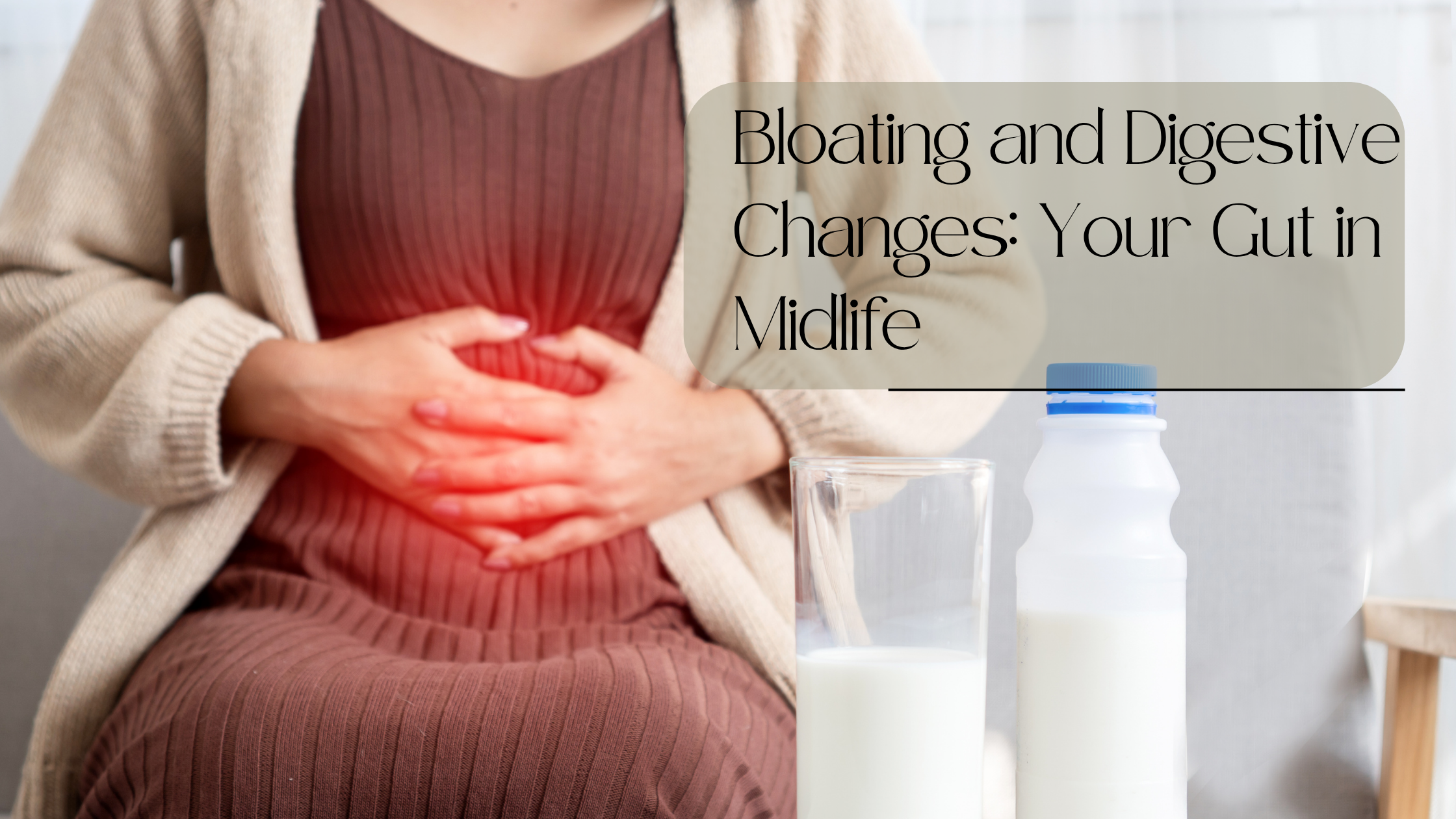
Bloating and Digestive Changes: Your Gut in Midlife
Can We Talk Honestly for a Minute?
You know that feeling when jeans fit at breakfast but by lunch you’re secretly unbuttoning them? By dinner you’re hiding a basketball under your top? We need to talk.
Maybe you’ve Googled “sudden bloating after 40” at 2 am, cut gluten, ditched dairy, sworn off FODMAPs… and still balloon by midday.
News‑flash: this isn’t just about food — it’s your hormones.
Let Me Tell You What’s Really Going On
Carol, 54, careful eater, came to clinic: “I inflate like a balloon each day. Book club’s off – too worried about gas.” She’d tried elimination diets, pricey probiotics, feared a serious gut disease.
Carol wasn’t broken — her hormones were speaking a new language and no one gave her the dictionary.
The Hormone–Gut Connection Nobody Talks About
Your gut is loaded with hormone receptors. Oestrogen & progesterone chat with your digestive tract all day.
- High oestrogen → slower transit, more water retention, food sensitivities, microbiome shifts
- Falling progesterone → relaxed gut muscles, even slower digestion, more gas
“Once I noticed bloating peaked before a period that finally arrived, it all clicked.” — Janine, 48
Why Your Usual Tricks Aren’t Working Anymore
- Microbiome shift: menopause changes bacterial balance
- Slower motility: food lingers, ferments → gas
- Stress reshaped: gut‑brain axis feels every hormonal wobble
“Now I plan outfits around potential bloating,” sighs Helen, 64.
What Actually Helps (And What Doesn’t)
Usually doesn’t work
- Endless food eliminations
- Random probiotics
- Ignoring hormones
- Forcing 30‑year‑old digestion rules
Usually does work
- Working with hormonal rhythm
- Targeted microbiome support
- Easing slower digestion
- Managing stress (your gut feels everything)
My “Bloat‑Free Day” Strategy
Morning – Set Your Digestive Tone
- Warm water + lemon on waking
- Protein within 2 hrs (eggs, Greek yoghurt, smoothie)
- 5 deep breaths before food (switch to “rest‑digest”)
Midday – Work With Body Rhythms
- Main meal at lunch (10 am‑2 pm strong digestion)
- Chew 20‑30 times each bite
- 5‑10 min walk post‑meal
Evening – Support Recovery
- Light, early dinner
- Peppermint / fennel / ginger tea
- Wind‑down routine for sleep & stress
When It’s Time to Get Help
- Bloating hurting confidence / life
- DIY attempts not working
- New food sensitivities appear
- Worry about underlying issues
- Need hormone‑aware guidance
Emma, 46: “Kerry helped me see bloating wasn’t my fault — it was hormones, and there were fixes.”
The Real Talk About Digestive Changes
Gut changes in menopause are normal. But suffering through them isn’t mandatory. Gentle, effective support lets you feel comfy in your clothes — and your life.
Ready for Comfortable Confidence?
Book a discovery call and create a personalised plan to calm bloating, balance hormones, and enjoy food again.
Book my free call— Kerry Knafl, naturopath at Sage & Thyme Naturopathy, Caboolture